

Brand Positioning Explained: A Practical Guide for Small Business Owners
Brand Positioning Matters for Small Businesses
As a small business owner, you’re constantly competing for attention. Sure, you show up online, show off your work, and work to connect with customers, but if your brand positioning isn’t clear, your marketing can easily get lost in a crowded market.
Brand positioning isn’t about being the newest or trendiest option. It’s about being clear, intentional, and memorable to your audience. When your positioning is strong, your marketing becomes easier, more focused, and more effective.
This guide breaks down what brand positioning really is, why it matters for small business owners, and how to start thinking about your own positioning in a practical, manageable way.
What Is Brand Positioning?
Brand positioning is the space your business occupies in your ideal customers' minds. It answers questions like:
Who is this business for?
What problem do they solve?
Why should someone choose them over other options?
At its core, brand positioning defines how your business is perceived and how well that perception aligns with what you actually offer.
Why Brand Positioning Is Crucial for Small Businesses
Many small business owners assume brand positioning is something only large companies need to consider. But in reality, it’s even more important for small businesses.
Clear brand positioning helps you:
Stand out in crowded markets
Attract customers who are a good fit
Avoid competing solely on price
Create more consistent messaging
Make better decisions about content, platforms, and offers
Without clear positioning, marketing often feels scattered. You may find yourself trying every trend, copying competitors, or constantly second-guessing what to say. Solid positioning removes that guesswork and gives your audience a reason to remember and trust you.
The Cost of Unclear Brand Positioning
When your positioning isn’t defined, it may appear that:
Your content feels vague or generic, or lacks consistency
Your audience doesn’t fully understand what you offer
You attract clients who aren’t the “right fit”
Marketing feels exhausting instead of strategic
These challenges aren’t a reflection of your ability or effort; they’re a sign that your brand foundation needs clarity and strategy.
What Makes Strong Brand Positioning
Effective brand positioning is built on a clear understanding of:
Your audience: Who you’re serving and what they truly care about
Your value: What makes your product, service, approach, or perspective different
Your role: The specific problem you help solve
Your message: How you talk about your business in a way that resonates with clients
How Brand Positioning Shapes Your Marketing
When your positioning is clear, marketing becomes simpler and more aligned. You’ll no longer have to guess what to post or how to describe your services, because they will be tailored to your audience and designed to stand out from the competition.
Strong positioning helps you:
Choose marketing channels more intentionally
Write clearer website, social media, email (etc.) copy
Create more focused content
Build trust faster with potential customers
Stay consistent across platforms
How to Think About Your Own Brand Positioning
You don’t need a full rebrand to improve your positioning. Start by asking:
Who do I most want to work with? (your ideal customer)
What do clients consistently come to me for?
What problem do I solve best?
How do I solve that problem uniquely?
How do I want people to describe my business? (your reputation)
Simply put, effective positioning helps you create clear and precise content that aligns with your target audience’s needs.
The Lifespan of Your Brand Position
Brand positioning isn’t a one-time exercise. As your business grows, your positioning may evolve, but the foundation should always remain intentional.
When positioning is done well, it supports every part of your marketing and makes growth feel more manageable and less overwhelming.
Ready to Clarify Your Brand Positioning?
If this post helped you understand why brand positioning matters, the next step is putting it into practice.
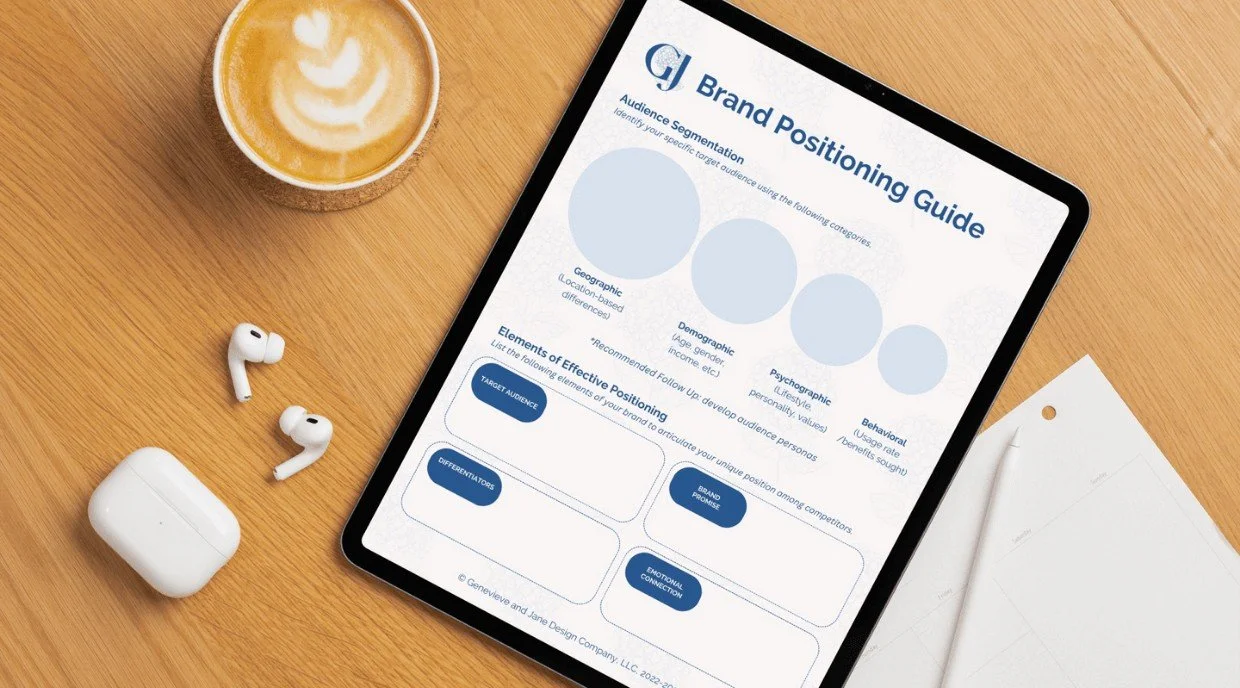
I’ve created a free Brand Positioning Guide to help small business owners move from scattered ideas to clear, actionable positioning. Inside the guide, you’ll work through key elements of effective positioning, including audience segmentation, brand promise, differentiators, emotional connection, and your unique selling proposition. You’ll also find guided exercises and templates to help you define how your brand fits into the market and how to communicate that clearly to the right audience.
This guide is designed to help you step back, gain clarity, and intentionally position your business, so your marketing feels more focused and aligned.
So if you’re ready to help your business stand out in a crowded marketplace, download the Brand Positioning Guide for free!
Final Thoughts
If marketing has felt confusing or exhausting, your positioning may be the missing piece.
Brand positioning will help give your marketing direction. It will help you stand out, attract the right customers, and design marketing efforts that help you accomplish your business goals.
If you need help developing your own brand, learn more about my services, or reach out to schedule a free consultation!